
Yoga at Home: Easy Practice Guide for All Levels
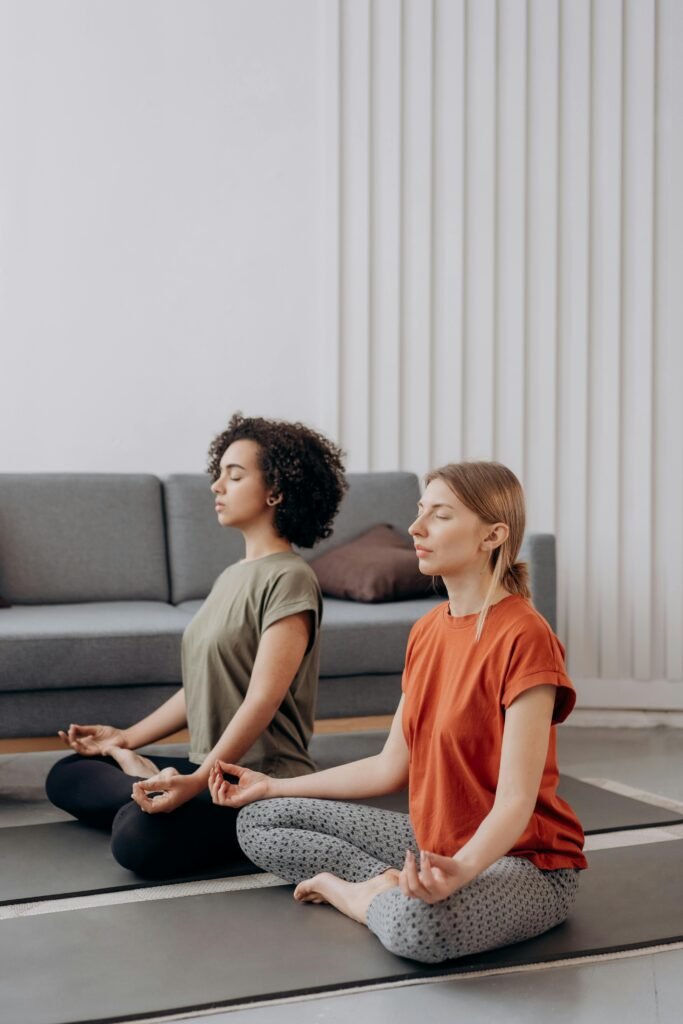
Practicing yoga at home has become more well-known than ever, advertising a helpful way to remain fit, decrease stress, and make strides in general well-being. Whether you’re a fledgling or a progressed yogi, a home-based routine gives adaptability and consolation. With a fair few essential instruments, anybody can make a home yoga practice that suits their level and objectives. In this section, we’ll explore how to start a home practice, essential tips, and simple routines for all expertise levels. From making strides in adaptability to boosting mental well-being, this discipline has benefits for everyone.
Why Practice Yoga at Home?
Many individuals turn to yoga at home for its comfort and cost-effectiveness. Practicing at home dispenses with the requirement to travel to a studio, making it simpler to remain reliable. Also, it permits you to learn at your own pace, tailor sessions to your temperament, and select the time that fits your schedule.
Key Benefits of Yoga at Home
- Adaptability Advancement: Regular home sessions can enormously improve your adaptability and mobility.
- Mental Clarity: This practice upgrades focus and decreases anxiety.
- Physical Quality: Numerous postures construct muscle quality and progress posture.
- Weight Administration: With regular exercise, this practice supports weight loss and toning.
- Push Help: Deep breathing during practice can lower cortisol levels.
Getting Started with Home Yoga Practice
Before you start, it’s imperative to set up a comfortable and distraction-free space for your home practice sessions.
Set Up Your Space
Designate a calm range where you can roll out a mat. Guarantee the space is clean, well-lit, and has sufficient room for development. Including candles, essential oils, or calming music can upgrade the atmosphere.
Assemble Basic Yoga Hardware
While negligible gear is required, having these things can improve your experience:
- Mat: Gives padding and grip.
- Blocks: Help in keeping up appropriate form.
- Strap: Makes a difference with extension and flexibility.
- Comfortable Clothing: Wear breathable and stretchable attire.
Yoga for Beginners at Home
If you’re new to home workouts, begin with essential postures and brief sessions to construct consistency.
Basic Beginner Yoga Poses
- Mountain Posture (Tadasana): Awesome for making strides, posing, and grounding.
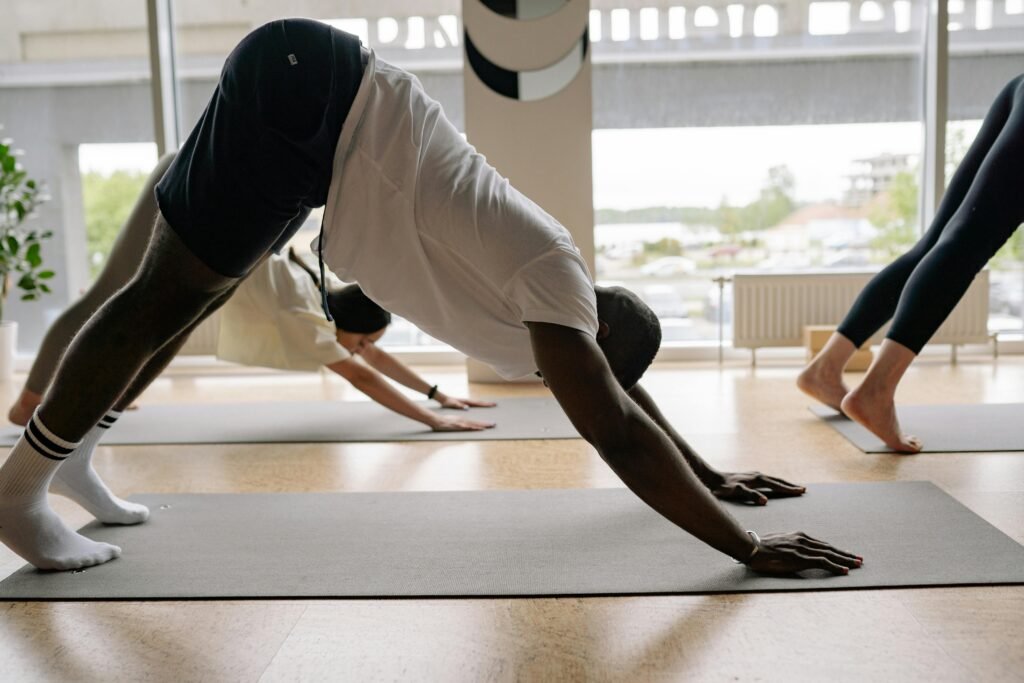
- Descending Pooch (Adho Mukha Svanasana): Upgrades adaptability in the spine and hamstrings.
- Child’s Pose (Balasana): Develop for loosening up and amplifying the back.
- Cat-Cow Extend: Increases spinal adaptability and warms up the body.
- Situated Forward Twist (Paschimottanasana): Extends the hamstrings and calms the mind.
Beginner Practice Routine Example
- 5 minutes: Profound breathing and warm-up stretches.
- 10 minutes: Flow through the selected poses.
- 5 minutes: Contemplation or Savasana for relaxation.
By following this schedule, tenderfoots can continuously construct quality, adaptability, and confidence.
Halfway Yoga Practice at Home
Once comfortable with apprentice postures, you can advance to middle sequences.
Prescribed Halfway Yoga Postures
- Warrior II (Virabhadrasana II): Strengthens the legs and enhances balance.
- Triangle Posture (Trikonasana): Upgrades adaptability and extends the sides.
- Bridge Posture (Setu Bandhasana): Opens the chest and fortifies the back.
- Chair Posture (Utkatasana): Builds lower body strength.
Halfway Yoga Stream Case
- Warm-up: 5 minutes
- Pose course of action: Mountain Pose → Warrior II → Triangle Pose → Bridge Pose → Chair Pose
- Cooldown: Savasana for 5 minutes
Regular home sessions at the intermediate level can boost stamina and mental focus.
Yoga Progression for Home Practice
Advanced yogis can challenge themselves with complex postures that require quality, adaptability, and balance.
Challenging Poses to Try
- Crow Posture (Bakasana): Arm-adjusting posture that fortifies the core.
- Headstand (Sirsasana): Improves adjust and concentration.
- Wheel Posture (Urdhva Dhanurasana): Profound backbend that increases spine flexibility.
- Ruler Pigeon Posture (Kapotasana): Opens hips and extends the chest deeply.
Security Tips for a Progressive Home
- Continuously warm up legitimately some time recently, attempting advanced poses.
- Utilize props if vital to keep up safety.
- Hold close a divider when attempting reversals like headstands.
- Listen to your body and avoid pushing beyond your limits.
Tips for Keeping Up a Steady Yoga Practice at Home
- Set a Plan: Practice at the same time every day to construct a habit.
- Utilize Online Assets: Follow guided recordings or connect to virtual classes.
- Track Advance: Keep a diary to record improvements.
- Remain Patient: Progress in this practice is slow, so remain consistent.
Consistency in your practice at home will yield long-term benefits for both your intellect and body.
Conclusion: Grasp the Control of Yoga at Home
Whether you’re a beginner or progressing your home practice, yoga at home offers perpetual openings for development, mending, and self-discovery. By joining basic schedules and continuously progressing to more complex postures, you can appreciate the full range of yoga benefits, including pain alleviation, expanded adaptability, upgraded mental clarity, and improved general health.
Committing to a steady one can also fortify your center, boost vitality levels, and help keep up enthusiastic balance in ordinary life. The best portion is that you can tailor each session to your individual needs, inclinations, and objectives, making your home genuinely unique.
Create your personalized home yoga journey nowadays and be involved in the surprising change it brings—not just physically, but also rationally and profoundly.